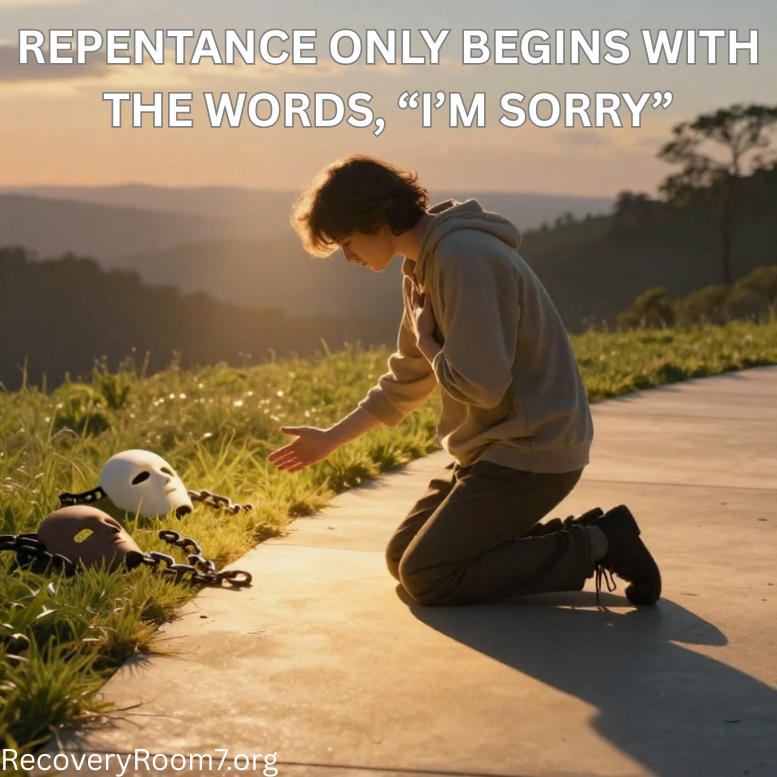

“I’m sorry” can come out of your mouth long before anything has changed in your heart. Real repentance is more than emotional words in a crisis; it is a surrender that shows up in your choices, your patterns, and your priorities. God is not moved by polished speeches but by a broken and honest heart that is willing to turn. The Holy Spirit is after transformation, not just apology.
In recovery, “I’m sorry” is often the first thing we learn to say, especially after the wreckage of addiction or destructive choices. But if your change stops at an apology, you stay trapped in the same cycles. God wants to move you from regret to repentance, from just feeling bad to actually walking in a new direction. This study is needed because freedom is not built on repeated apologies, but on a surrendered life that consistently chooses truth over denial and action over empty words.
🛑Repenting to another person means you don’t just say “I’m sorry,” you face what you’ve done and own it without excuses. You name specifically how you hurt them, listen to their pain without defending yourself, and ask what making it right might look like from their perspective. You don’t pressure them to forgive you on your timetable; instead, you accept their response, even if they need time. Then, you follow through with consistent changed behavior so they see repentance not only in your words, but in your walk.

“For godly sorrow produces repentance leading to salvation, not to be regretted; but the sorrow of the world produces death.”
2 Corinthians 7:10
Repentance begins with the words, “I’m sorry,” but it does not end there. Saying “I’m sorry” can be a moment; repentance is a lifestyle. Godly sorrow is when the Holy Spirit convicts you, and instead of just wanting the consequences to go away, you actually grieve how your sin has wounded God’s heart and damaged others. That grief moves you into turning away from what once controlled you.
“He who covers his sins will not prosper, but whoever confesses and forsakes them will have mercy.”
Proverbs 28:13
Notice the two steps: confess and forsake. Confession says, “I did this.” Forsaking says, “By God’s grace, I am turning from this.” In recovery, you may have apologized countless times while secretly planning to return to the same behavior. That is why so many people feel stuck, ashamed, and hopeless. True repentance does not promise perfection, but it does produce a genuine change of mind and direction.
King David did more than say “I’m sorry” after his sin; he cried out:
“Create in me a clean heart, O God, and renew a steadfast spirit within me.”
Psalm 51:10
David didn’t just want forgiveness; he wanted a new heart and a steadfast spirit. In recovery, you need more than a clean record—you need a changed heart. Repentance asks God to do deep heart surgery, not just clean the surface.
Jesus told a story about a son who said the right words but didn’t obey, and another who refused at first but later changed and did the will of his father:
“But what do you think? A man had two sons, and he came to the first and said, ‘Son, go, work today in my vineyard.’ He answered and said, ‘I will not,’ but afterward he regretted it and went.”
Matthew 21:28–29
Repentance is like that second son—your actions eventually match what God is asking, even if it takes wrestling and humility to get there. In your healing journey, this means making amends where possible, changing environments, setting boundaries, and choosing accountability. It means aligning your walk with your words.
Real repentance will affect how you speak, what you watch, who you spend time with, what you do with your body, and how you handle temptation. It is not about trying harder in your own strength, but about yielding more fully to the Holy Spirit. When you truly repent, you invite God to change not just what you do, but who you are becoming.

QUESTIONS TO ASK YOURSELF FOR SELF-EXAMINATION
-
When I say “I’m sorry,” am I more upset about the consequences or about how my sin has affected God and others?
-
In what specific areas of my life do my actions still contradict the apologies I have spoken?
-
What am I still trying to hide, minimize, or justify instead of fully confessing to God and trusted people?
-
How would my daily choices look different if I moved from just feeling regret to actually walking in repentance?
-
Who in my life has heard my apologies repeatedly but has not seen consistent change, and what would repentance look like toward them?
-
What fears or excuses keep me from taking concrete steps—like making amends, setting boundaries, or changing my environment?
-
How am I inviting the Holy Spirit to transform my heart, not just help me manage my image after I’ve failed?

BIBLE VERSES FOR MEDITATION
“Repent therefore and be converted, that your sins may be blotted out, so that times of refreshing may come from the presence of the Lord.”
Acts 3:19
“If we confess our sins, He is faithful and just to forgive us our sins and to cleanse us from all unrighteousness.”
1 John 1:9
“The sacrifices of God are a broken spirit, a broken and a contrite heart—these, O God, You will not despise.”
Psalm 51:17
“Let the wicked forsake his way, and the unrighteous man his thoughts; let him return to the Lord, and He will have mercy on him; and to our God, for He will abundantly pardon.”
Isaiah 55:7
“Bring forth fruits worthy of repentance.”
Luke 3:8
“Draw near to God and He will draw near to you. Cleanse your hands, you sinners; and purify your hearts, you double-minded.”
James 4:8
“For the Lord is near to those who have a broken heart, and saves such as have a contrite spirit.”
Psalm 34:18

PRAYER
Abba Father, I come before You knowing that I have often stopped at the words, “I’m sorry,” without truly changing. I confess that I have tried to manage consequences instead of allowing You to transform my heart. Create in me a genuine godly sorrow that leads me into real repentance. Show me where my actions do not line up with my words, and give me the courage to make things right where I can. I surrender my will, my habits, my relationships, and my patterns to You. Teach me to walk in repentance as a daily lifestyle, not just a moment of emotion. I ask You to cleanse me, strengthen me, and guide me into lasting change. In Jesus name, Amen.
